

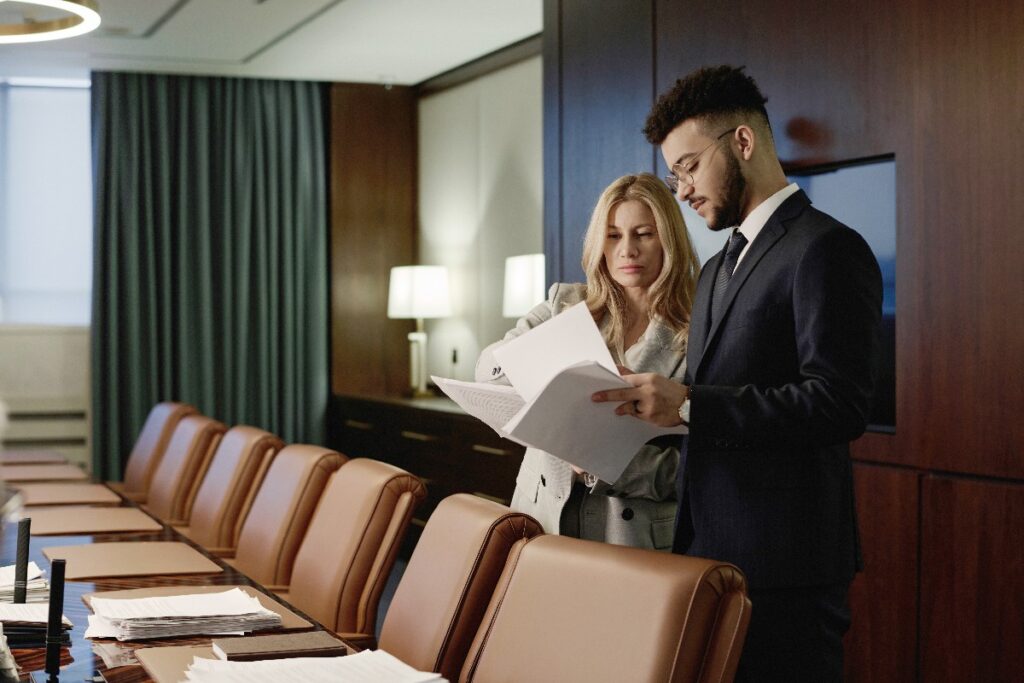
Walking into a well-designed meeting space sets the tone for a productive and successful collaboration. Whether you are hosting a client presentation or a brainstorming session, the environment plays an important role in how your ideas are received.
Understanding conference room booking etiquette ensures that you make the best use of your reserved space and create a positive impression on your team, clients, or partners. This guide will cover essential tips to help you navigate conference or meeting room booking etiquette with ease.
Essential Conference Room Booking Etiquette
The quality of a workspace is reflected in how its meeting rooms are managed and used. A few thoughtful practices ensure everything runs smoothly and respectfully.
1. Secure Your Meeting Space in Advance
Spontaneous discussions are great for creativity, but they should not disrupt the office’s flow. Always book your meeting space well in advance. Scrambling for a venue just minutes before a client arrives creates unnecessary stress and disturbance.
Booking early ensures that the environment is right and that the amenities, such as video conferencing tools or whiteboards, are ready to use when needed.
2. Honour Existing Reservations
Nothing disrupts a professional environment quite like a room dispute. Always respect the booking schedule. If a space is reserved by someone else, do not occupy it under the assumption that they might not show up.
On the other hand, if you have booked a room and your plans change, cancel the reservation immediately. Ghost bookings prevent others from utilising valuable facilities and can cause frustration and confusion.
3. Begin and Conclude Within Your Allotted Time
Time is the most valuable resource in any business. Arrive promptly for your booking so you can settle in, connect your devices, and start exactly on time. More importantly, complete all activities before your allotted time ends.
A good rule of thumb is to wrap up proceedings five minutes early. This buffer allows your team to pack up their belongings and vacate the area gracefully, ensuring the next group can enter without delay.
4. Maintain Focus Throughout the Meeting
A successful meeting respects both the environment and its participants. Keep your meeting outline tight and guide the conversation back on track if it strays. To ensure everyone remains engaged, ask all participants to silence their phones and put them away.
Laptops should be used only for meeting-related tasks to minimise distractions. When a group loses focus, the session often runs overtime, creating scheduling conflicts for the rest of the day.
5. Leave the Room Neat for the Next Group
When your session concludes, take a moment to restore the room to its original state. Push the chairs back under the table, erase any notes from the whiteboards, and clear away any litter. The next group should walk into a pristine environment, just as you did.
Additionally, once your meeting is finished, ensure you turn off the projector, lights, fans, and other electrical equipment. This not only saves energy but also helps maintain a professional, organised workspace for everyone.
6. Be Discreet With Food And Beverages
Catering can enhance a long meeting session when managed well. If you bring food and beverages into a shared space, choose items that are easy to consume and have no strong, lingering odours.
Always use coasters to protect polished surfaces. Most importantly, ensure all cups, plates, and crumbs are completely removed before you leave the room.
7. Keep Noise Levels Under Control
When using a meeting space, it’s important to be mindful of noise levels. Avoid talking loudly or playing music that could disrupt others in neighboring rooms. If conducting a video conference call, consider using headphones to minimise disturbances to those around you.
High-end meeting rooms often include built-in noise control features, such as soundproof walls and acoustic panels. However, even in these spaces, participants need to be considerate of others and keep noise levels reasonable.
8. Use Meeting Rooms With Intention and Efficiency
Not every discussion requires a large-sized boardroom. Match the size of your gathering to the space’s capacity. Booking a six-person room for a quick one-on-one catch-up is an inefficient use of resources. Select a meeting room that comfortably fits your group, leaving larger rooms available for those who truly need them.
Dos and Don’ts for Meeting Rooms
Navigating conference room booking etiquette requires a clear understanding of how shared spaces function. To make things simple, here is a quick list of dos and don’ts for meeting rooms to help you maintain professionalism and courtesy in the workplace.
Do:
- Avoid cancelling your reservation unless necessary.
- Report any technical issues or damaged equipment to the reception staff promptly.
- Communicate clearly with your team members about who will be responsible for booking and setting up the meeting room.
- Use the meeting room for its intended purpose and refrain from using it as a personal workspace.
Don’t:
- Use a meeting room without a formal reservation, even if it appears empty.
- Allow your session to spill over into the next person’s booked time.
- Leave personal items, dirty cups or rubbish behind.
- Interrupt another group’s session to ask when they will be finished unless they are still occupying the room during your allotted time.
- Avoid bringing non-essential items into meeting rooms, including suitcases or other bulky personal belongings not needed for the meeting.
Elevate Your Next Professional Gathering
Practising good conference room booking etiquette is a small but powerful way to show leadership and consideration. Keep these principles in mind, and every gathering you host will be a seamless, professional experience from start to finish.
If you are hosting a meeting outside your office, a dedicated meeting room can provide a more focused setting. For a truly elevated experience, you can book high-end meeting rooms at Work X, where exceptional design and first-class amenities set the perfect tone for a productive, successful meeting.